
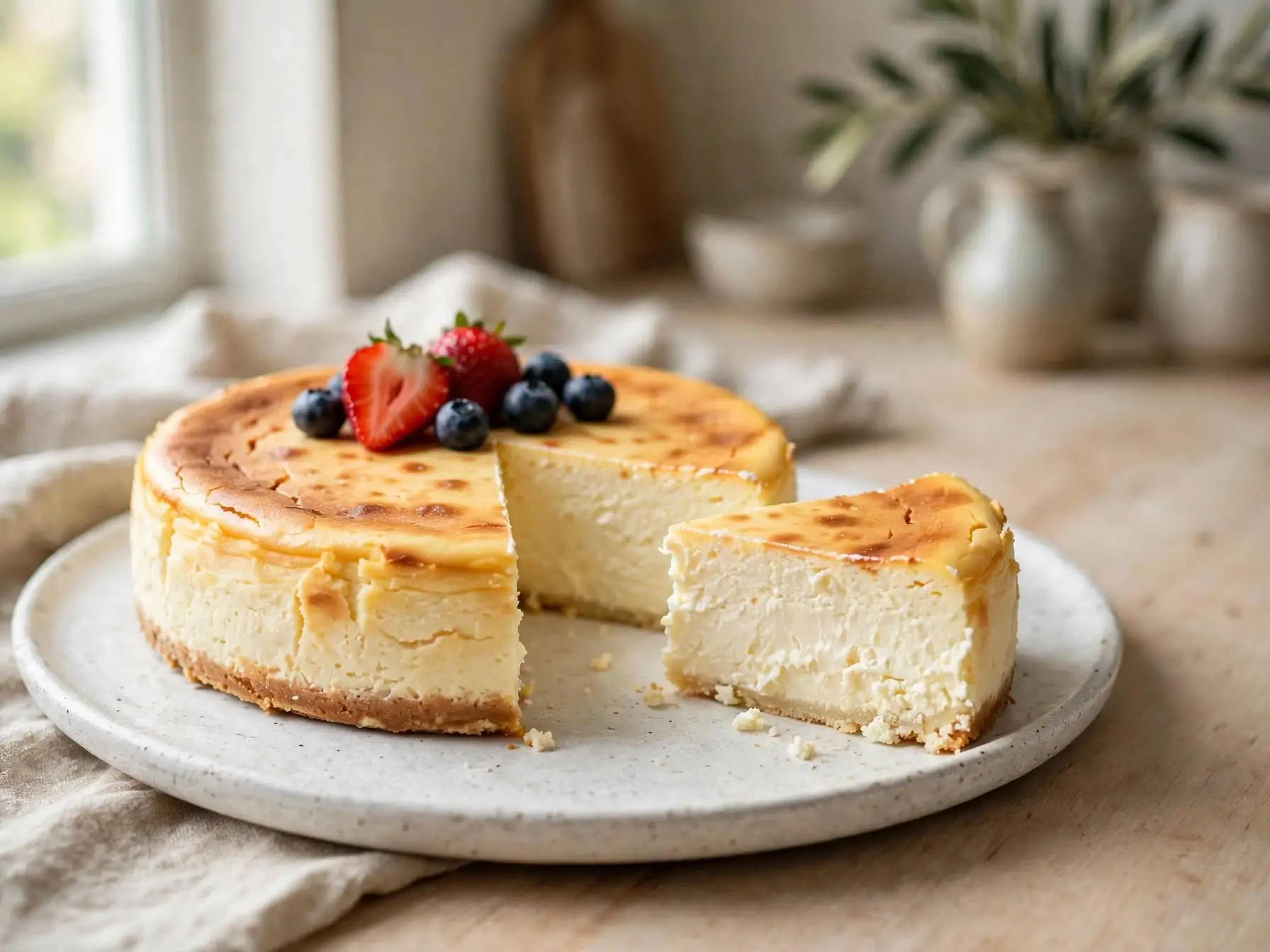
If you’re looking for a cottage cheese protein cheesecake that feels like a real dessert, this one is worth adding to your recipe rotation. Cottage cheese gives the filling a creamy texture and adds protein without requiring a long list of specialty ingredients. It sits alongside our other protein cheesecake recipes if you want to compare approaches.
The cheesecake is rich, lightly sweet, and smooth after blending. I like serving it chilled because the filling firms up as it cools, making it easier to slice and giving it that classic cheesecake texture.
Table of Contents

High-Protein Cottage Cheese Cheesecake
- Total Time: About 5 hours 15 minutes
- Yield: 10 slices
Description
Creamy, lightly sweet cheesecake made with cottage cheese and Greek yogurt for a simple high-protein dessert.
Ingredients
- 24 ounces (680 g) cottage cheese
- 1 cup (240 g) plain Greek yogurt
- 3 large eggs
- 1/2 cup (120 ml) pure maple syrup
- 2 teaspoons vanilla extract
- 1 tablespoon fresh lemon juice
- 2 tablespoons (16 g) cornstarch
Instructions
- Preheat the oven to 325°F. Lightly grease a 9-inch springform pan and line the bottom with parchment paper.
- Add the cottage cheese and Greek yogurt to a blender or food processor. Blend until completely smooth.
- Add the eggs, maple syrup, vanilla extract, lemon juice, and cornstarch. Blend just until smooth and combined.
- Pour the filling into the prepared pan. Gently tap the pan against the counter to release large air bubbles.
- Bake for 45–55 minutes, until the edges are set and the center still has a slight jiggle.
- Turn off the oven and leave the cheesecake inside with the door slightly open for 15–20 minutes.
- Remove the cheesecake and let it cool completely. Cover and refrigerate for at least 4 hours, preferably overnight.
- Run a thin knife around the edge before removing the springform pan. Slice and serve chilled.
Notes
Blend the cottage cheese thoroughly for the smoothest texture. Avoid overmixing after adding the eggs, and don’t wait for the center to become completely firm in the oven. The cheesecake will continue setting as it cools and chills.
Store covered in the refrigerator for 3–4 days. Individual slices can also be frozen and thawed overnight in the refrigerator.
Nutrition: The total protein and nutrition values will vary depending on the brands, substitutions, and serving size used.
A chilled slice of this cottage cheese protein cheesecake makes a simple dessert when you want something creamy without a complicated baking project. I like keeping the toppings simple with fresh berries, but you can easily adjust the sweetness and toppings to suit what you have on hand.
- Prep Time: 15 minutes
- Cook Time: 45–55 minutes
- Category: Dessert
- Cuisine: American
Why You’ll Like This Recipe
- Cottage cheese adds protein while creating a creamy filling.
- The ingredients are simple and easy to find at a regular grocery store.
- Blending does the heavy lifting, so there’s no need to worry about lumps from the cottage cheese.
- It can be made ahead, which makes it useful when you want dessert ready in the refrigerator.
- The sweetness is easy to adjust depending on your preference and the toppings you plan to use.
Ingredients You’ll Need
Cottage Cheese
Use full-fat or low-fat cottage cheese depending on the texture and nutrition you prefer. I recommend blending it until completely smooth before baking. Small curds should disappear into the filling.
Greek Yogurt
Greek yogurt helps create a thick, creamy cheesecake filling while adding another source of protein. Plain Greek yogurt works best here.
Eggs
Eggs help the cheesecake set as it bakes and give the filling a soft, custardy texture.
Maple Syrup
A little maple syrup provides sweetness and adds a mild caramel-like flavor. You can adjust the amount slightly if you prefer a less-sweet cheesecake.
Vanilla Extract
Vanilla rounds out the flavor and gives the cheesecake a more traditional dessert taste.
Lemon Juice
A small amount of lemon juice adds brightness and balances the richness of the dairy ingredients.
Cornstarch
Cornstarch helps the filling set and makes the finished cheesecake easier to slice.
How to Make Cottage Cheese Protein Cheesecake
- Prepare the pan. Preheat your oven to 325°F. Lightly grease a 9-inch springform pan and line the bottom with parchment paper.
- Blend the cottage cheese. Add the cottage cheese and Greek yogurt to a blender or food processor. Blend until the mixture is completely smooth. Scrape down the sides as needed.
- Add the remaining ingredients. Add the eggs, maple syrup, vanilla extract, lemon juice, and cornstarch. Blend just until the mixture is smooth and combined. Avoid blending longer than necessary once the eggs are incorporated.
- Pour into the pan. Transfer the cheesecake mixture to the prepared springform pan. Gently tap the pan against the counter a couple of times to help release any large air bubbles.
- Bake. Bake for about 45–55 minutes, or until the edges look set and the center still has a slight jiggle when the pan is gently moved.
- Cool gradually. Turn off the oven and leave the cheesecake inside with the door slightly open for about 15–20 minutes. This gradual cooling helps reduce the chance of a large crack forming.
- Chill. Remove the cheesecake from the oven and let it cool completely at room temperature. Cover and refrigerate for at least 4 hours, preferably overnight, before slicing.
- Serve. Run a thin knife around the edge before releasing the springform pan. Slice with a clean, sharp knife and add your favorite toppings.
Tips for the Best Results
Blend the Cottage Cheese Until Smooth
This is probably the most important step. If the cottage cheese is not blended well, you may notice small curds throughout the finished cheesecake.
A high-powered blender will give you the smoothest filling, but a food processor can also work well.
Don’t Overmix After Adding the Eggs
Once the eggs are added, blend only until everything is combined. Excessive mixing can incorporate more air into the filling, which can contribute to cracking as the cheesecake cools.
Don’t Overbake
The center should still have a slight wobble when you remove the cheesecake from the oven. It will continue to firm up as it cools and chills.
A cheesecake that is baked until completely firm in the oven can end up with a drier, firmer texture.
Give It Plenty of Chilling Time
It can be tempting to slice cheesecake as soon as it reaches room temperature, but the texture is much better after several hours in the refrigerator.
I usually prefer making this the day before serving.
Variations and Substitutions
Use a Different Sweetener
You can replace some or all of the maple syrup with another sweetener that works for baked desserts. Keep in mind that liquid and granulated sweeteners can affect the texture differently, which is worth remembering across our full lineup of high-protein desserts.
Try Vanilla Bean
For a stronger vanilla flavor, add vanilla bean paste instead of vanilla extract.
Add a Simple Topping
Fresh berries, sliced strawberries, a spoonful of Greek yogurt, or a light drizzle of maple syrup all work well with the creamy cheesecake.
Make It Chocolate
For a chocolate version, add unsweetened cocoa powder to the blended filling. You may need to adjust the sweetness slightly because cocoa powder adds bitterness and also changes the consistency.
How to Serve It
This cottage cheese protein cheesecake is best served cold. The chilled filling is firm enough to slice while still staying creamy.
For a simple topping, add fresh berries just before serving. You can also serve individual slices with a spoonful of Greek yogurt or a small drizzle of maple syrup.
If you’re making it for a gathering, keep the cheesecake refrigerated until you’re ready to serve it.
Storage and Meal Prep
Store leftover cheesecake covered in the refrigerator.
For the best texture, enjoy it within 3–4 days.
You can also freeze individual slices. Wrap each slice well and place it in an airtight freezer-safe container. Thaw the slices overnight in the refrigerator before serving.
The texture may be slightly different after freezing and thawing, but individual portions are convenient when you want to prepare dessert ahead of time.
Protein Notes
The main protein sources in this cheesecake are cottage cheese, Greek yogurt, and eggs. The exact amount of protein will depend on the brands and varieties you use.
If you want to increase the protein content further, check the nutrition labels of your cottage cheese and Greek yogurt and choose products with the protein level that fits your preferences.
The total protein and nutrition values will vary depending on the brands, substitutions, and serving size used.
Frequently Asked Questions
Can you taste the cottage cheese in this cheesecake?
Blending the cottage cheese until completely smooth significantly changes its texture. The finished cheesecake has a creamy dairy flavor rather than the curdy texture associated with cottage cheese.
Do I have to use a blender?
A food processor can also work. The main goal is to blend the cottage cheese thoroughly so the filling is smooth before baking.
Why is my cottage cheese cheesecake watery?
A cheesecake can become watery if the cottage cheese or other dairy ingredients contain more moisture than expected, or if the cheesecake is not baked and chilled long enough to set properly.
Make sure the cheesecake is fully chilled before judging its final texture.
Can I use low-fat cottage cheese?
Yes. Low-fat cottage cheese can be used, although the finished cheesecake may have a slightly different richness and texture compared with one made with full-fat cottage cheese.
Can I make this cheesecake ahead of time?
Yes. In fact, I prefer making it ahead. The cheesecake needs several hours in the refrigerator to fully firm up, so preparing it the day before works especially well.
What can I put on top?
Fresh berries, strawberries, Greek yogurt, or a small drizzle of maple syrup are simple options. Add toppings shortly before serving for the freshest texture.
Conclusion
This high-protein cottage cheese cheesecake is a simple way to turn everyday ingredients into a creamy, satisfying dessert. The cottage cheese and Greek yogurt give the filling a smooth texture and add protein without making the recipe complicated. Reach for our Greek Yogurt Protein Cheesecake when you want a change.
I like making it ahead and letting it chill overnight, especially when I want dessert ready in the refrigerator. Add fresh berries, Greek yogurt, or your favorite topping, and adjust the sweetness to your taste.