
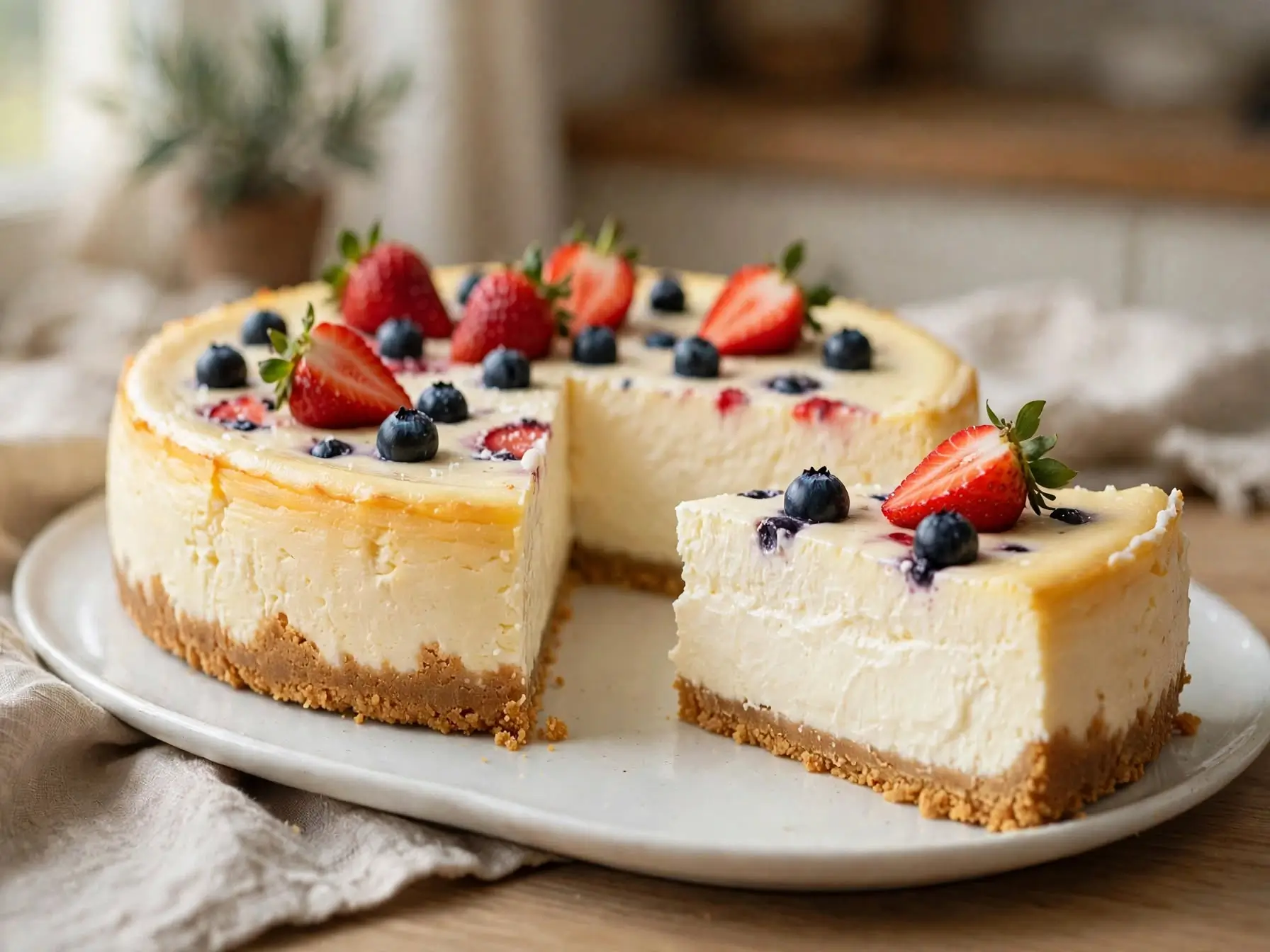
If you love classic cheesecake but want a little more protein in your dessert, this cottage cheese cheesecake is worth trying. Blended cottage cheese gives the filling a smooth, creamy texture while keeping the recipe simple and familiar. It follows the same idea as our other cottage cheese desserts.
I like this version because the cottage cheese blends into the filling rather than leaving you with a lumpy or overly tangy dessert. After baking and chilling, the cheesecake has a creamy center, lightly sweet flavor, and the familiar richness you expect from cheesecake.
Table of Contents
Creamy Cottage Cheese Cheesecake
- Total Time: About 5 hours 10 minutes
- Yield: 10 slices
Description
A creamy, protein-rich twist on classic cheesecake made with blended cottage cheese, cream cheese, and a simple graham cracker crust.
Ingredients
For the crust:
- 1 ½ cups graham cracker crumbs
- 5 tablespoons unsalted butter, melted
- 2 tablespoons granulated sugar
For the filling:
- 2 cups full-fat cottage cheese
- 8 ounces cream cheese, softened
- ¾ cup granulated sugar
- 3 large eggs
- 2 teaspoons vanilla extract
- 1 tablespoon fresh lemon juice
- 2 tablespoons cornstarch
Instructions
- Preheat the oven to 350°F. Line the bottom of a 9-inch springform pan with parchment paper.
- Mix the graham cracker crumbs, melted butter, and sugar until evenly moistened. Press firmly into the bottom of the pan.
- Bake the crust for 8 minutes. Remove and let cool slightly.
- Blend the cottage cheese until completely smooth.
- Add the softened cream cheese, sugar, eggs, vanilla, lemon juice, and cornstarch. Blend just until smooth and combined.
- Pour the filling over the crust and smooth the top.
- Reduce the oven temperature to 325°F. Bake for 50 to 60 minutes, or until the edges are set and the center still has a slight wobble.
- Turn off the oven and leave the cheesecake inside with the door slightly open for about 30 minutes.
- Remove from the oven and cool completely at room temperature.
- Cover and refrigerate for at least 4 hours before slicing. For the cleanest texture, chill overnight.
Notes
Blend the cottage cheese thoroughly for the smoothest filling. If your cottage cheese contains a lot of liquid, drain the excess before measuring and blending.
Store covered in the refrigerator for about 4 to 5 days. Individual slices can be frozen for up to 2 months and thawed overnight in the refrigerator.
Nutrition information will vary depending on the brands, substitutions, and serving size used.
- Prep Time: 20 minutes
- Cooling & Chilling Time: At least 4 hours
- Cook Time: 50–60 minutes
- Category: Dessert
- Cuisine: American
Why You’ll Like This Cottage Cheese Cheesecake
There are a few things that make this cheesecake especially practical for home baking.
- Blended cottage cheese creates a smooth filling. A blender or food processor breaks down the curds so the finished cheesecake has a creamy texture.
- It adds protein from a familiar ingredient. Cottage cheese provides much of the protein in the recipe, with the eggs contributing additional protein.
- The flavor still feels like cheesecake. Vanilla, lemon juice, and a little sugar balance the mild tang of the cottage cheese.
- It can be made ahead. Cheesecake needs time to cool and chill, so it works well as a dessert you prepare earlier in the day or the day before serving.
- The ingredient list stays manageable. You don’t need specialty ingredients to make a creamy homemade cheesecake.
Ingredients You’ll Need
For the Graham Cracker Crust
Graham cracker crumbs: These create the classic cheesecake base. You can buy crumbs or crush whole graham crackers until fine.
Unsalted butter: Melted butter binds the crumbs together and helps the crust hold its shape after baking.
Granulated sugar: A small amount adds sweetness to the crust.
For the Cottage Cheese Cheesecake Filling
Full-fat cottage cheese: This is the key ingredient. I recommend using full-fat cottage cheese for a creamy, rich texture. If your cottage cheese is especially watery, drain off excess liquid before blending.
Cream cheese: Cream cheese gives the filling the characteristic cheesecake flavor and helps create a richer, firmer texture.
Granulated sugar: Sugar provides sweetness and helps balance the tanginess of the dairy ingredients.
Large eggs: Eggs help bind the filling and give the cheesecake structure as it bakes.
Vanilla extract: Vanilla rounds out the flavor.
Fresh lemon juice: A small amount adds brightness and reinforces the classic cheesecake flavor without making the filling taste strongly of lemon.
Cornstarch: Cornstarch helps the filling set while keeping the texture creamy.
How to Make Cottage Cheese Cheesecake
1. Prepare the crust
Preheat the oven to 350°F.
Combine the graham cracker crumbs, melted butter, and sugar in a bowl. Stir until the crumbs are evenly moistened and the mixture resembles wet sand.
Press the mixture firmly into the bottom of a 9-inch springform pan. Use the bottom of a measuring cup or glass to create an even layer.
Bake the crust for about 8 minutes, then set it aside to cool slightly while you prepare the filling.
2. Blend the cottage cheese
Add the cottage cheese to a high-speed blender or food processor and blend until very smooth.
Stop and scrape down the sides as needed. Take your time with this step because the smoother the cottage cheese is before you add the remaining ingredients, the smoother the finished cheesecake will be.
3. Make the filling
Add the cream cheese, sugar, eggs, vanilla extract, lemon juice, and cornstarch to the blended cottage cheese.
Blend until the mixture is completely smooth and evenly combined. Avoid blending longer than necessary once everything is incorporated.
Pour the filling over the prepared crust and gently smooth the top.
4. Bake the cheesecake
Reduce the oven temperature to 325°F and bake the cheesecake for approximately 50 to 60 minutes.
The edges should look set while the center should still have a slight jiggle when you gently move the pan. The center will continue to firm up as the cheesecake cools and chills.
Avoid waiting for the entire surface to become completely firm in the oven. Overbaking can make a cheesecake drier and more prone to cracking.
5. Cool and chill
Turn off the oven and leave the cheesecake inside with the oven door slightly open for about 30 minutes.
Remove the cheesecake and let it cool completely at room temperature.
Once cooled, cover it and refrigerate for at least 4 hours, although overnight chilling will give you an even firmer texture and cleaner slices.
Run a thin knife around the edge before removing the springform pan.
Tips for the Best Results
Blend the cottage cheese until completely smooth
This is the most important texture tip. Cottage cheese curds can remain noticeable if they aren’t blended thoroughly.
A high-speed blender generally produces a smoother result than simply stirring or whisking the cottage cheese.
Use softened cream cheese
Let the cream cheese soften before blending. Cold cream cheese can be more difficult to incorporate evenly and may leave small pieces throughout the filling.
Don’t overbake the cheesecake
A slight wobble in the center is what you want when the cheesecake comes out of the oven. It will continue to set as it cools.
If you bake it until the entire center looks firm, the final texture may be firmer and drier than intended.
Give it enough chilling time
It can be tempting to slice cheesecake as soon as it cools, but the refrigerator is an important part of the process.
At least four hours gives the filling time to firm up. Overnight chilling makes it easier to slice neatly.
Use the right cottage cheese
Different brands of cottage cheese contain different amounts of moisture. If yours seems particularly wet, drain excess liquid before blending.
The moisture level can affect how firmly the cheesecake sets.
Variations and Substitutions
Use a different cottage cheese
Low-fat cottage cheese can be used, but the finished cheesecake may be slightly less rich and creamy than one made with full-fat cottage cheese.
For the smoothest filling, blend either option thoroughly.
Add berries
Serve individual slices with fresh strawberries, blueberries, or raspberries. You can also add a spoonful of berry sauce just before serving.
Add a simple fruit topping
A thin layer of cooled fruit compote can add color and acidity to the creamy filling. Keep the topping relatively light so it doesn’t overpower the cheesecake.
Make a crustless cheesecake
If you prefer to skip the graham cracker crust, you can bake the filling in a parchment-lined springform pan. The finished cheesecake will be softer around the edges and won’t have the contrast of a crisp crust.
Adjust the sweetness
If you prefer a less-sweet cheesecake, you can reduce the sugar slightly. Keep in mind that changing the sugar amount will alter the overall flavor and may have a small effect on the texture.
How to Serve It
Let the chilled cheesecake sit at room temperature for about 10 to 15 minutes before serving. This takes some of the chill off and makes the creamy filling easier to appreciate.
Serve it plain, or add fresh berries for a simple topping. A small spoonful of Greek yogurt, fruit sauce, or lightly sweetened whipped cream also works well.
For cleaner slices, use a sharp knife and wipe the blade between cuts.
Storage and Meal Prep
Store leftover cheesecake covered in the refrigerator.
For the best quality, enjoy it within about 4 to 5 days.
You can also freeze individual slices. Wrap each slice well, then place the wrapped pieces in an airtight freezer-safe container or bag. Freeze for up to 2 months for best quality.
Thaw frozen cheesecake overnight in the refrigerator. The texture may be slightly different after freezing and thawing, but individual slices are convenient when you want dessert without making an entire cheesecake at once. The same trick works for our other protein-rich desserts.
Protein Notes
The main protein sources in this cheesecake are cottage cheese, cream cheese, and eggs. The exact protein content will depend on the brands and types of dairy products you use, as well as the number and size of servings.
For a higher-protein version, check the nutrition labels on your cottage cheese and cream cheese when shopping and choose the products that fit your preferences.
The total protein and nutrition values will vary depending on the brands, substitutions, and serving size used.
Frequently Asked Questions
Does cottage cheese cheesecake taste like cottage cheese?
When the cottage cheese is blended thoroughly and combined with cream cheese, vanilla, sugar, and lemon juice, its flavor becomes much more subtle. The finished dessert has the tangy, creamy flavor associated with cheesecake rather than tasting like a bowl of cottage cheese.
How do I make cottage cheese completely smooth?
Use a high-speed blender or food processor and blend the cottage cheese until no visible curds remain. Scrape down the sides during blending if needed.
If your blender struggles with a small amount of cottage cheese, adding the cream cheese and other filling ingredients can make it easier to blend.
Why is my cottage cheese cheesecake soft?
Cheesecake continues to set as it cools, so don’t judge the final texture immediately after baking. Make sure the cheesecake cools completely and chills for at least four hours.
Excess moisture in the cottage cheese or underbaking can also result in a softer filling.
Can I use low-fat cottage cheese?
Yes. Low-fat cottage cheese can work, although the cheesecake may have a slightly lighter and less rich texture than one made with full-fat cottage cheese.
Can I make this cheesecake without the crust?
Yes. You can bake the filling without a graham cracker crust. Line the bottom of the pan with parchment paper to make serving easier.
Can I freeze cottage cheese cheesecake?
Yes. Individual slices can be wrapped and frozen for up to about two months for best quality. Thaw them overnight in the refrigerator before serving.
Final Thoughts
This cottage cheese cheesecake keeps the creamy texture and familiar flavor of a classic cheesecake while using cottage cheese as one of its main ingredients. I especially like it when I want a homemade dessert that can be prepared ahead and kept in the refrigerator for several days. Give it plenty of time to chill, then serve it plain or with fresh berries for a simple finish. To keep the rotation going, give our Cottage Cheese Protein Cookie Dough a try.